Specialist protection, waterproofing and repair services.
A service-led division for structures already in operation — protecting substrates from chemical attack, keeping water out, and returning damaged concrete and joints to serviceable condition.
- Acid and chemical bunds
- Process and plant rooms
- Battery and dosing areas
- Effluent channels and sumps
- Mineral processing floors
 Installed system
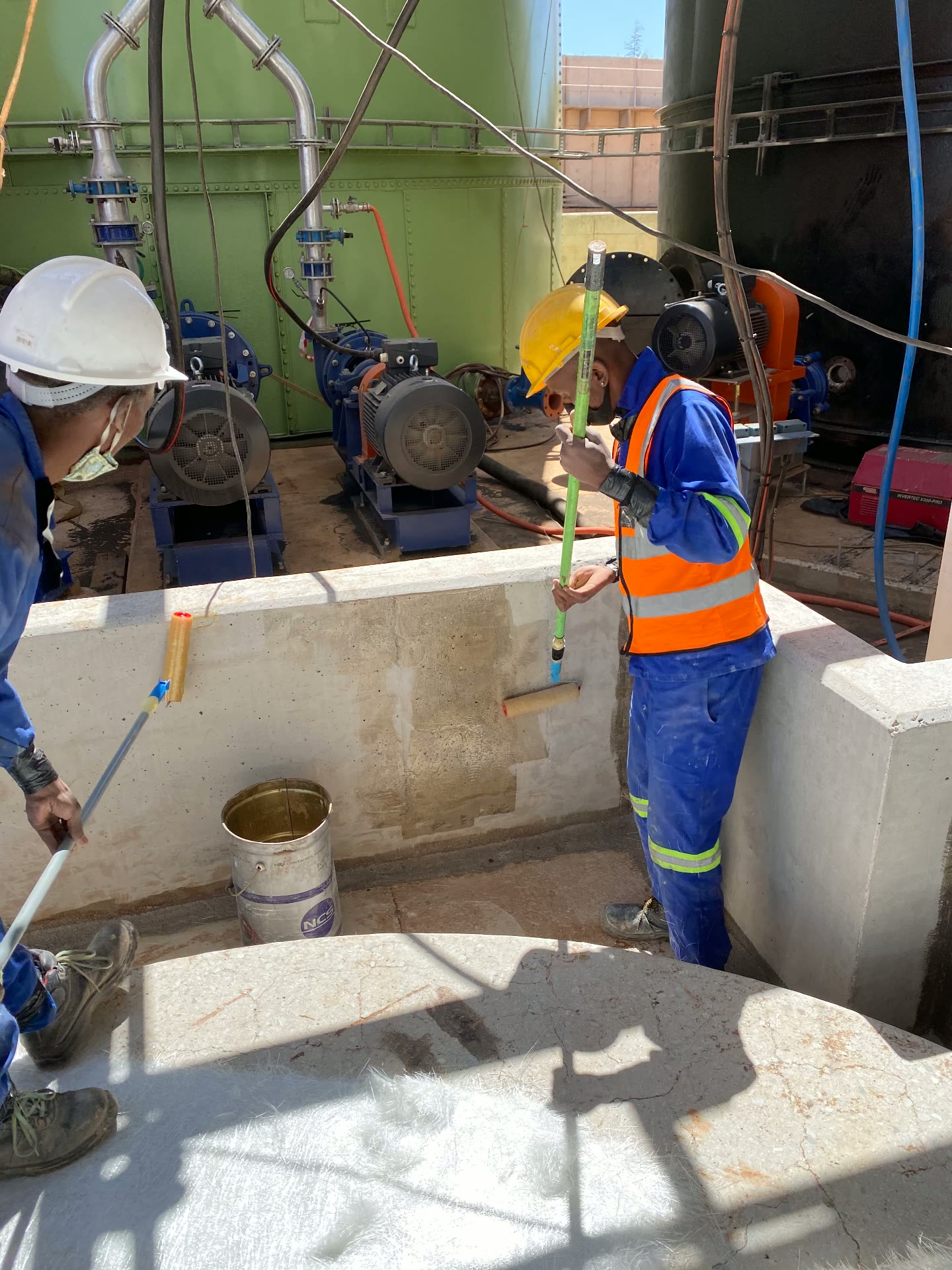
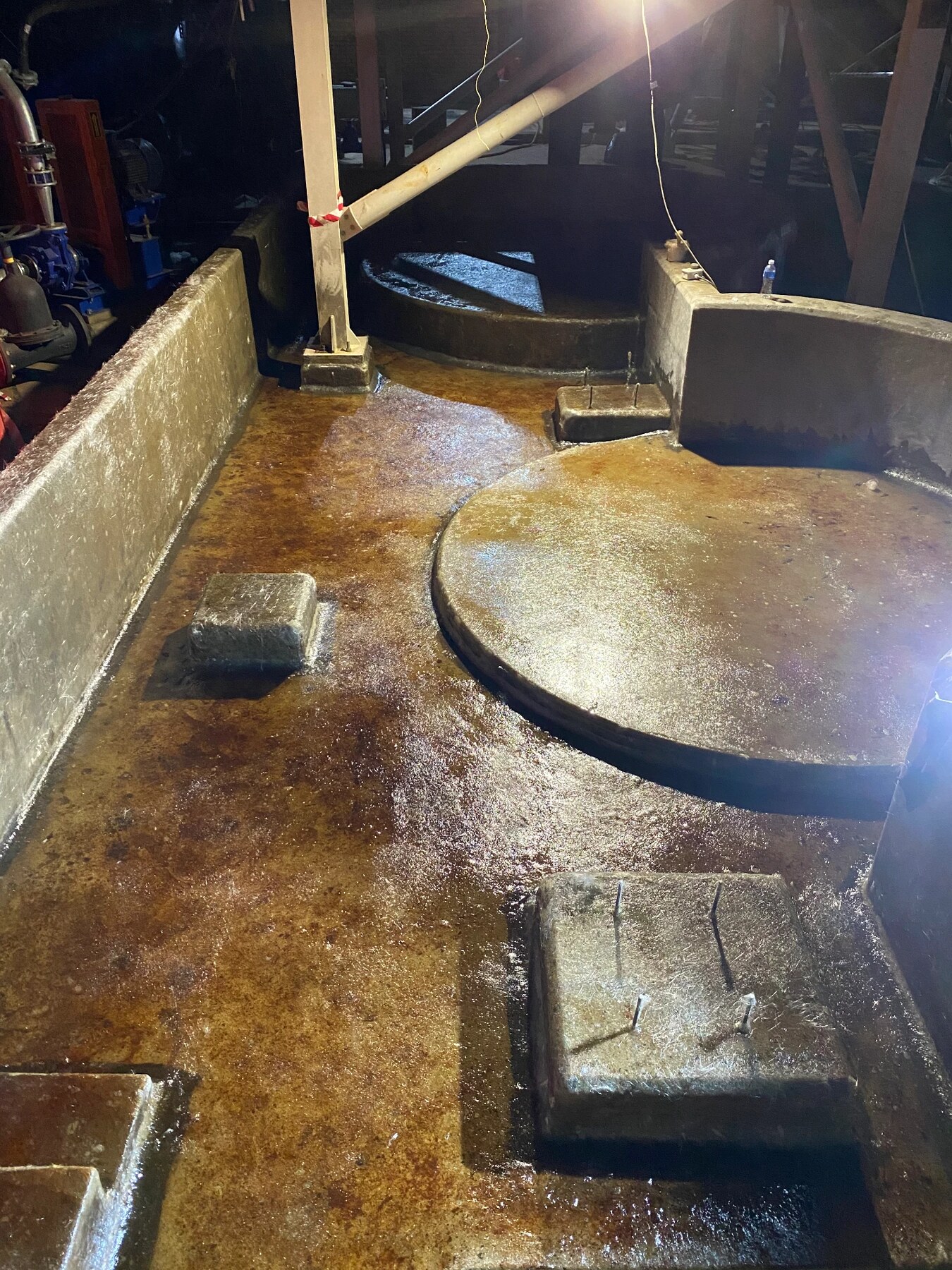
Acid-resistant lining to a chemical bund — plant and dosing area
Process areas, bunds and containment structures exposed to acids, alkalis and process effluent degrade rapidly. Concrete is attacked, reinforcement corrodes and contamination escapes the containment envelope.
Nuvo specifies and installs chemically resistant lining systems selected against the actual exposure profile — concentration, temperature and dwell time — with full substrate preparation, detailing at penetrations and upstands, and holiday testing where required.
Exposure survey covering the chemicals present, their concentration and temperature, and how long they dwell on the surface; substrate soundness and contamination checks; moisture testing where the slab is ground-bearing.
- Chemically resistant lining and coating systems
- Substrate repair mortars ahead of lining
- Detailing to upstands, penetrations and terminations
Mechanical preparation to the required profile, substrate reinstatement, then lining applied in specified coats. Work is phased around plant operation where the area cannot be fully released.
- Substrate profile and moisture verified before application
- Wet-film and coat-count checks during application
- Holiday (pinhole) testing where the system requires it
- Documented handover with maintenance guidance
- Podium and parking decks
- Plant rooms and wet areas
- Roofs and gutters
- Balconies and walkways
- Water-retaining structures
 Installed system
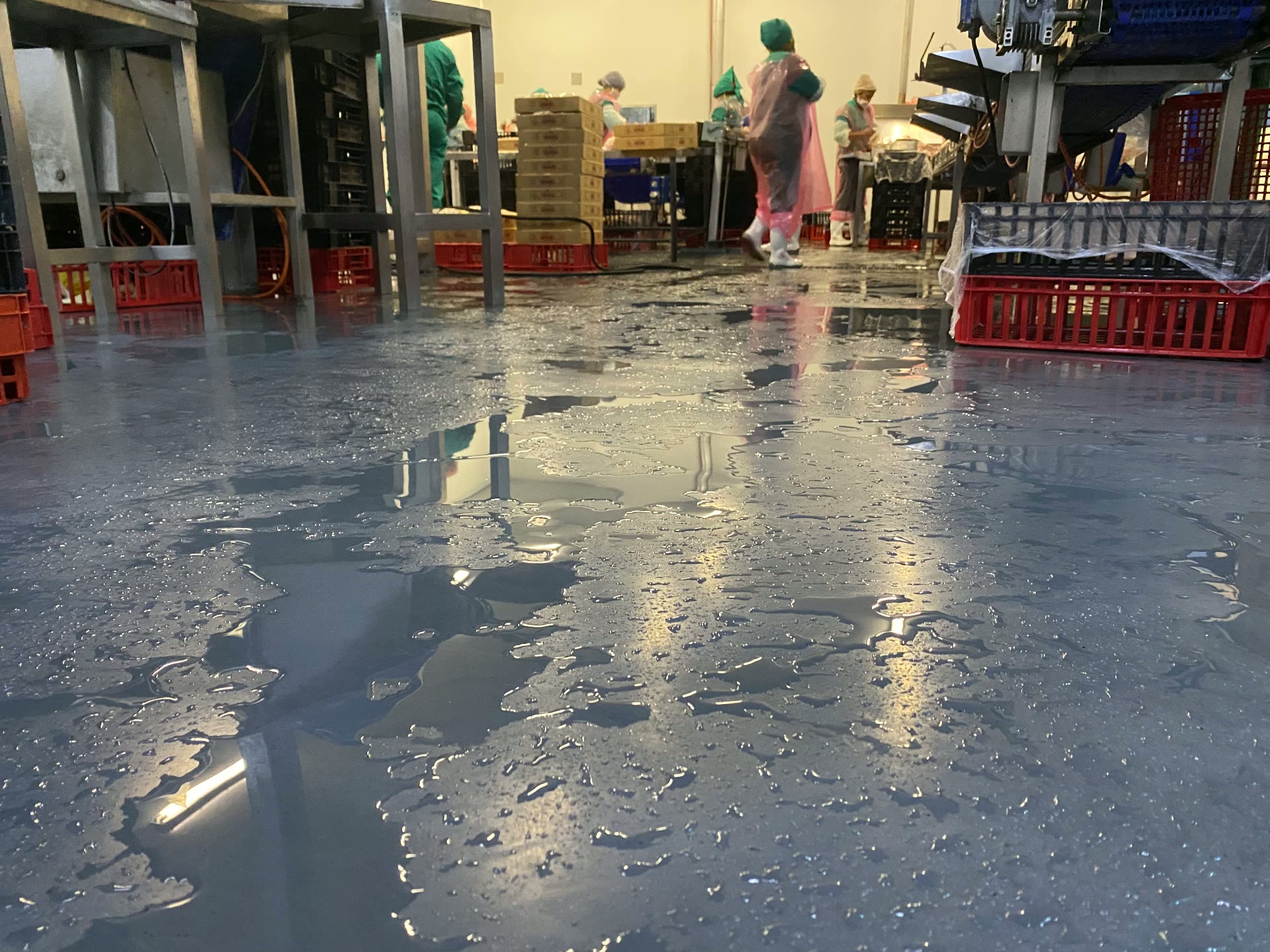
Sealed wet-area floor — food processing facility
Water ingress through decks, roofs, plant areas and wet rooms damages finishes and structure, and is almost always more expensive to fix later than to detail correctly now.
Applied membrane and coating systems installed with continuity across upstands, drains and junctions, matched to trafficking requirements and to the finishes installed above them.
Inspection of falls, drainage, existing membranes and the condition of upstands and junctions, together with the trafficking and finishes required above the membrane.
- Applied liquid membrane systems
- Coating systems for trafficked and non-trafficked areas
- Detailing at drains, upstands and movement joints
Preparation and repair, priming, then membrane application with continuous detailing at every junction. Weather and substrate moisture govern the programme.
- Substrate moisture and adhesion checks before application
- Continuity verified at upstands, drains and terminations
- Flood or water testing where the detail allows
- Documented handover with maintenance guidance
- Food and beverage processing areas
- Commercial kitchens and wash-down zones
- Effluent channels and sumps
- Plant rooms and wet areas
 Installed system
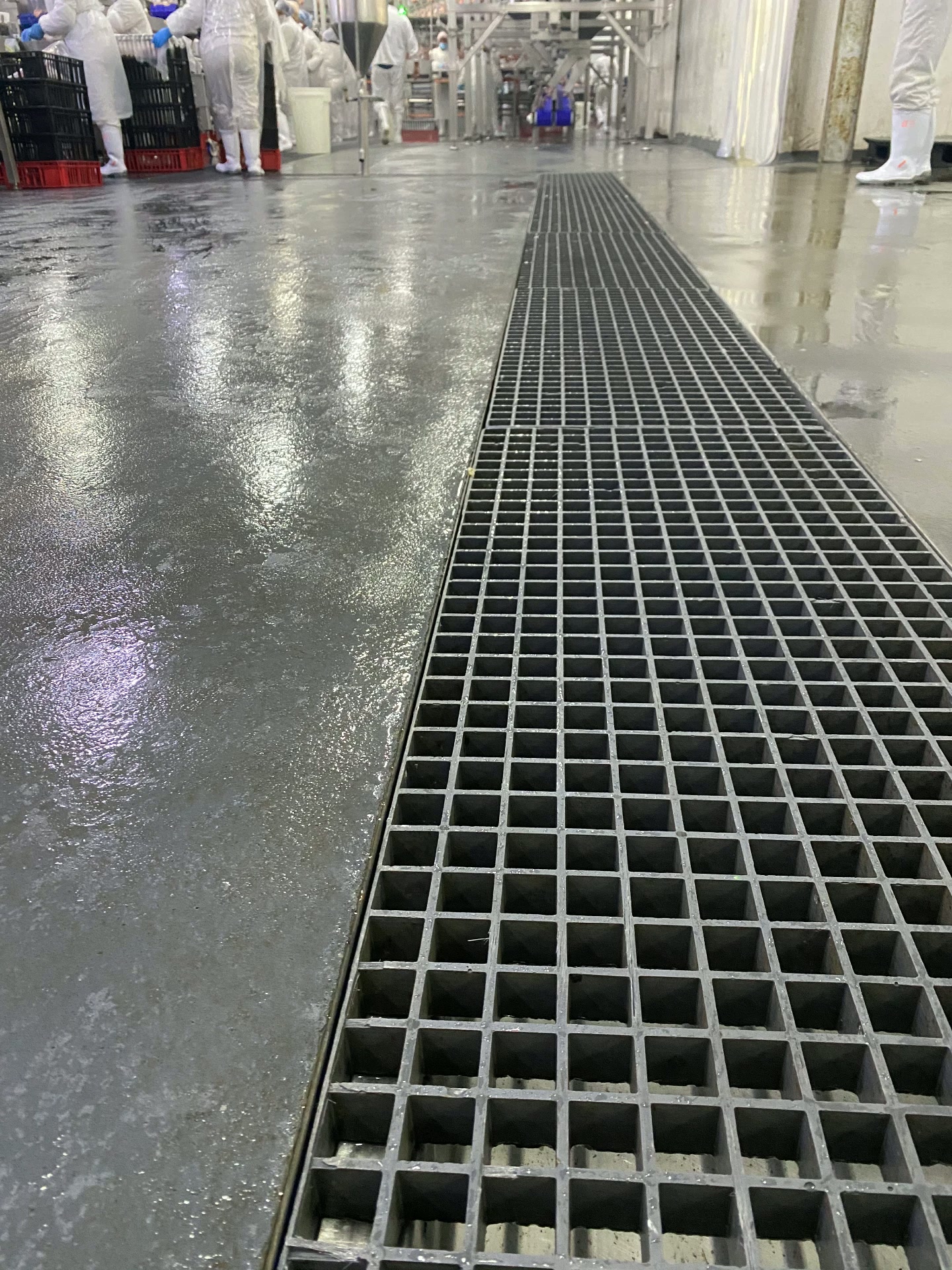
Slot drainage channel — food processing facility
Failed or poorly detailed drains cause ponding, hygiene risk and contamination spread. Around drains, screeds break down, terminations open up and effluent tracks beneath the floor instead of reaching the outlet.
Nuvo installs and refurbishes drainage in operating facilities — channels, gullies, slot drains and sumps — integrated with the surrounding floor: falls formed to the drain, hygienic coving at junctions, and sealed terminations so water reaches the drain rather than running under the floor.
Survey of falls, drain positions and condition, together with the volume and nature of the wash-down or effluent load and the state of the substrate around each outlet.
- Stainless steel and polymer drainage channels
- Gullies, slot drains and sumps
- Resin screeds and coving at drain junctions
- Refurbishment and resealing of existing drainage
Saw-cutting and breakout around the outlet, channels set to level and fall, bedding and jointing, then the surrounding floor reinstated and sealed. Work is phased section by section so the area keeps operating.
- Falls verified to drain toward the outlet before floor reinstatement
- Junction continuity checked at every channel and gully
- Flushing or water testing where the drainage detail allows
- Documented handover with maintenance guidance
- Warehouse and distribution floors
- Cold-store and dispatch areas
- Loading bays and yards
- Car park decks
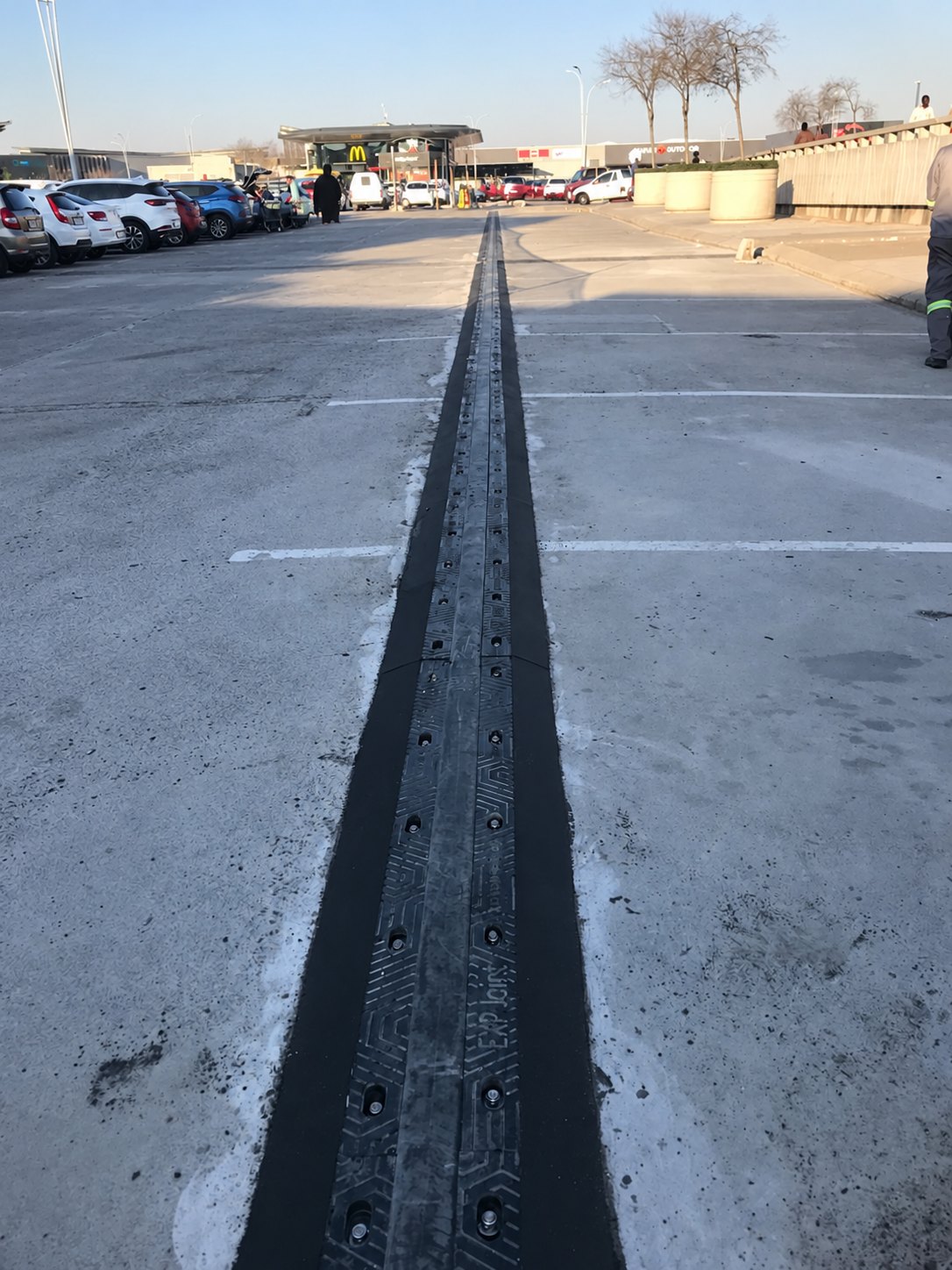 Installed system
Crack and joint repair — sealant applied to a prepared slab
Spalled joint arrises, failed sealants and worn nosings create trip hazards, damage wheels and allow water and contaminants into the slab.
Arris reinstatement with impact-resistant repair mortars, sealant replacement and nosing refurbishment — restoring a clean, trafficable joint line without replacing the slab.
Survey of joint condition along its length: arris damage, sealant state, movement observed and the traffic the joint carries. This determines whether a repair is adequate or a dedicated expansion-joint system is required.
- Impact-resistant arris repair mortars
- Replacement joint sealants
- Nosing refurbishment
- EXP Joints expansion-joint systems where a dedicated system is required
Saw-cutting back to sound concrete, breakout and cleaning, reinstatement of the arris, then resealing. Work is normally sequenced joint by joint so the facility keeps operating.
- Sound concrete confirmed before reinstatement
- Joint line and level checked against the surrounding slab
- Sealant depth and adhesion checked
- Documented handover with maintenance guidance
- Columns, beams and slabs
- Spalled and delaminated concrete
- Crack injection and stitching
- Plinths, kerbs and thresholds
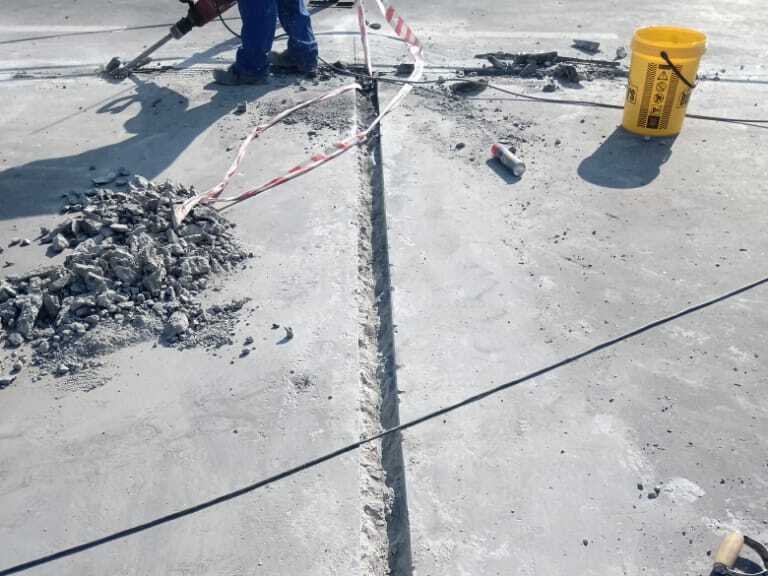 Installed system
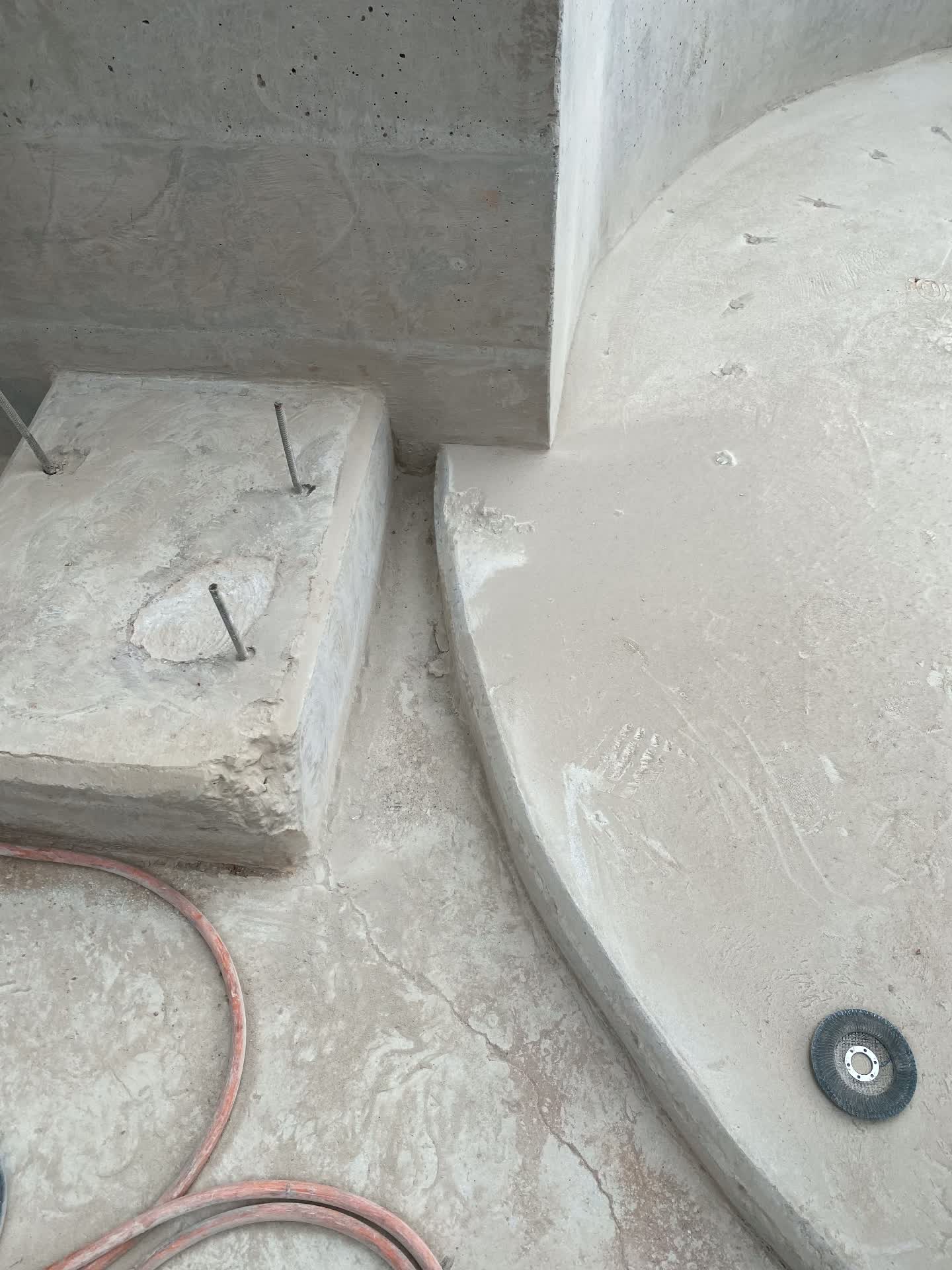
Concrete breakout and channel cutting ahead of structural repairs
Cracking, delamination, spalling and exposed reinforcement reduce load capacity and accelerate deterioration once moisture reaches the steel.
Breakout to sound substrate, reinforcement treatment and reinstatement with polymer-modified repair mortars or resin systems, followed by a protective coating where exposure requires it.
Delamination survey, identification of exposed or corroding reinforcement, and assessment of crack type and movement. Structural engineering input is obtained where load capacity is in question.
- Polymer-modified repair mortars
- Resin repair and injection systems
- Reinforcement treatment
- Protective coatings where exposure requires them
Breakout to sound substrate, reinforcement cleaning and treatment, reinstatement in specified layers, then curing and protection. Access, propping and shutdown windows drive the programme.
- Breakout extent confirmed against the delamination survey
- Reinforcement condition recorded before reinstatement
- Repair adhesion and profile checked
- Documented handover with maintenance guidance